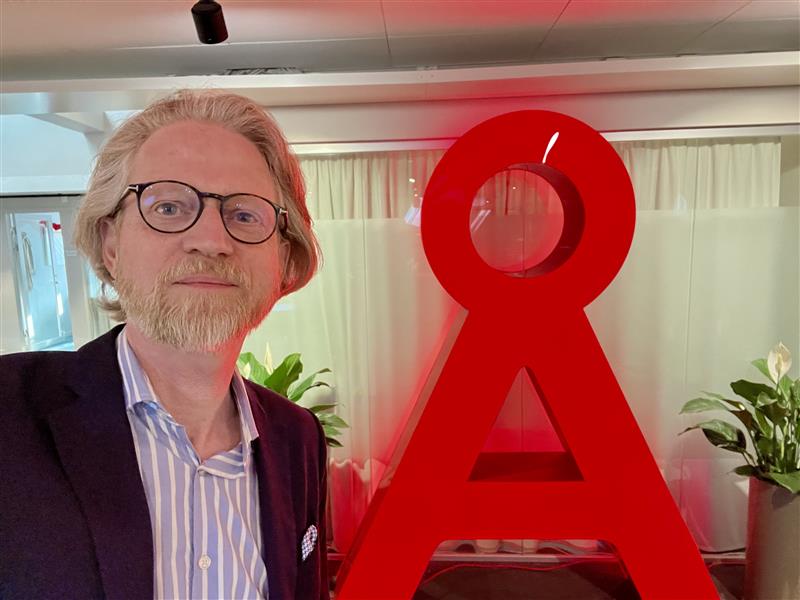
Fredrik Wesslén joins Anchor Management Consulting today. With experience as an entrepreneur, CEO, and consulting manager, he has helped organizations drive change, develop their operations, and translate AI and automation into tangible business value.
We asked five questions to get to know Fredrik better and hear his thoughts on leadership, change management, and the organizations of the future.
I have extensive experience from various roles and situations, both nationally and internationally. This has made me a generalist with insights into many areas of corporate and operational management. I see this as a major advantage when it comes to understanding issues holistically, since a complex problem often has multiple causes.
At the same time, if I were to choose areas where I have more in-depth knowledge, they would be leadership and management, product development, consulting services, and AI/Intelligent Automation.
I've always been fascinated by friction within organizations—why it arises and how to resolve it. I've always been drawn to diving into a problem area within an organization and solving it together with the team.
I am a staunch advocate of a positive view of human nature, in which everyone is able and willing to take responsibility for their actions. Sometimes that’s not the case, and all you can do is figure out how to deal with it.
I’d like to take this opportunity to offer a few pieces of advice. The fundamental prerequisites are data quality and process knowledge. Poor data quality always leads to poor output, and an understanding of the process is the foundation for identifying the right value. Always focus on value and complexity. Identify the processes where AI and intelligent automation deliver the highest business value and where the process has lower complexity. This creates the best conditions for an initial project that delivers results quickly, which is very important from a change management perspective.
In addition, it’s important to avoid suboptimization—that is, focusing only on parts of the process. Try to view processes end-to-end, especially if they span multiple functions within the organization. This usually yields the greatest value. Finally, don’t forget the change management efforts needed to maximize the value of the investment!
AI is not a silver bullet, but it is a powerful tool when used correctly, often in conjunction with other automation technologies (hyperautomation). Many companies are hesitant because the field is evolving so rapidly. My advice is to invest in analyzing data and processes to identify the right candidates. The organization needs to carry out this work regardless.
Of course, there are many answers to this question, but I would say that the most common reason is a lack of good leadership. Major change initiatives tend to become very management-heavy, with to-do lists and project descriptions.
Next comes the big challenge of turning the “WHAT” into the “HOW”—how should we lead and communicate the change to the teams and individual employees, and then provide support throughout the ongoing change process?
At the same time, it is important to be clear and consistent about the purpose and what it means for employees (What's in it for me?). It is also about managing enthusiasm, concerns, resisters, and staff changes.
Even before I started at Roboyo, I had been thinking about using my experience to help other companies—in a management consulting role. However, the opportunity with Roboyo was too interesting to turn down, and it provided me with invaluable experience. When I felt I was done at Roboyo, I began thinking again about starting out as a solo consultant.
At the same time, the role of a consultant as a sole proprietor can be quite lonely, and when I spoke with Anchor, the question came up as to whether I would be open to becoming an employee. After a few interviews and conversations, it felt like the perfect fit. A focused management consulting firm with highly skilled people, a great offer, and a track record of interesting projects. A no-brainer, as they say, and it feels like I’ve finally found what I’ve been thinking about for several years.
It’s supposed to be a bit of a surprise, but I can reveal one thing. People who don’t already know about it are usually surprised to learn that I was a career officer—I don’t really fit the stereotype, which I think is a good thing.
And I can wiggle my ear, too!